
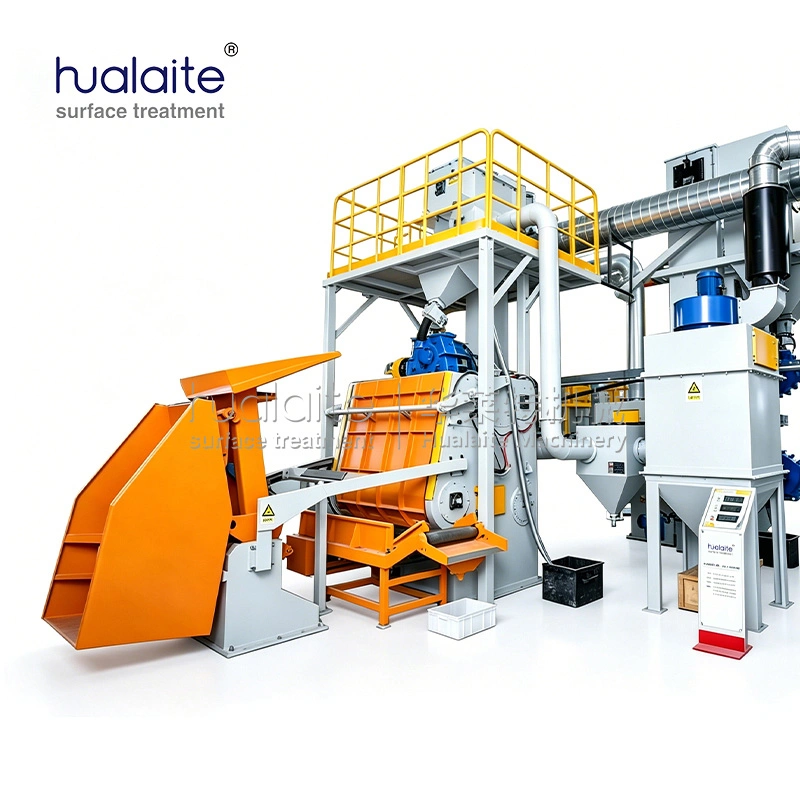
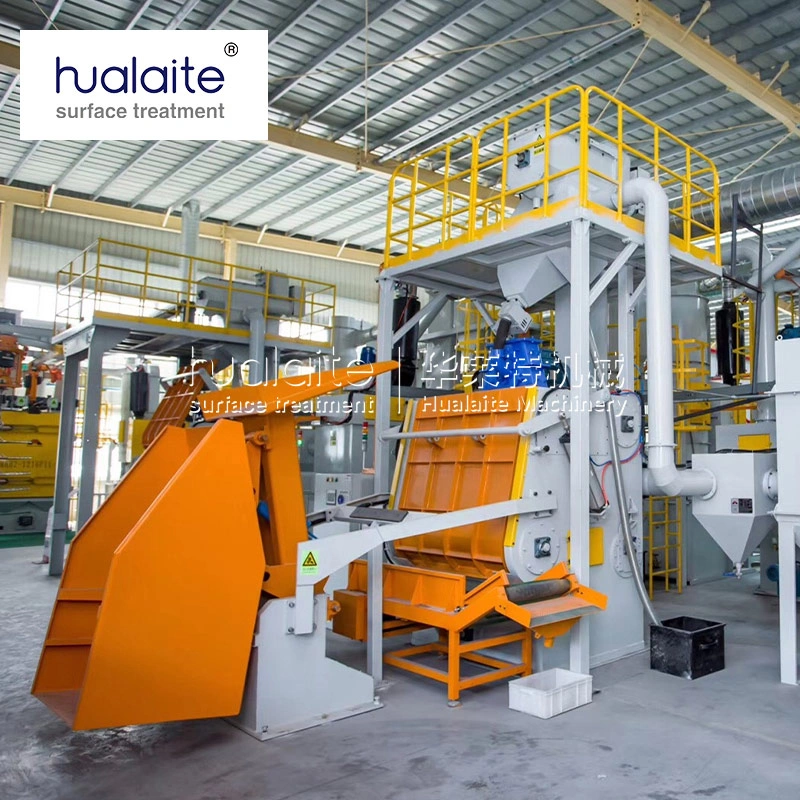
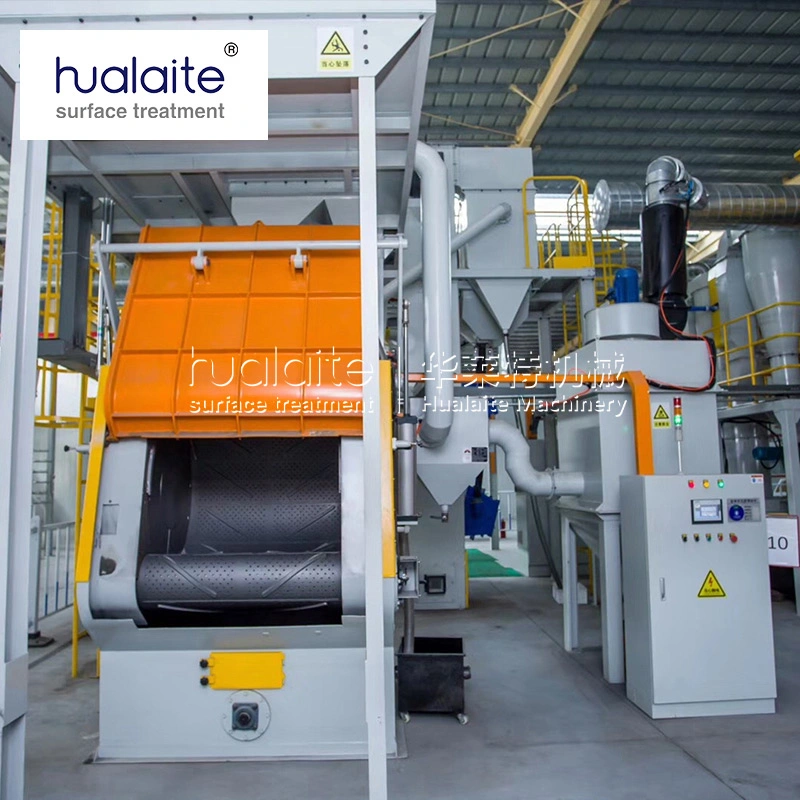
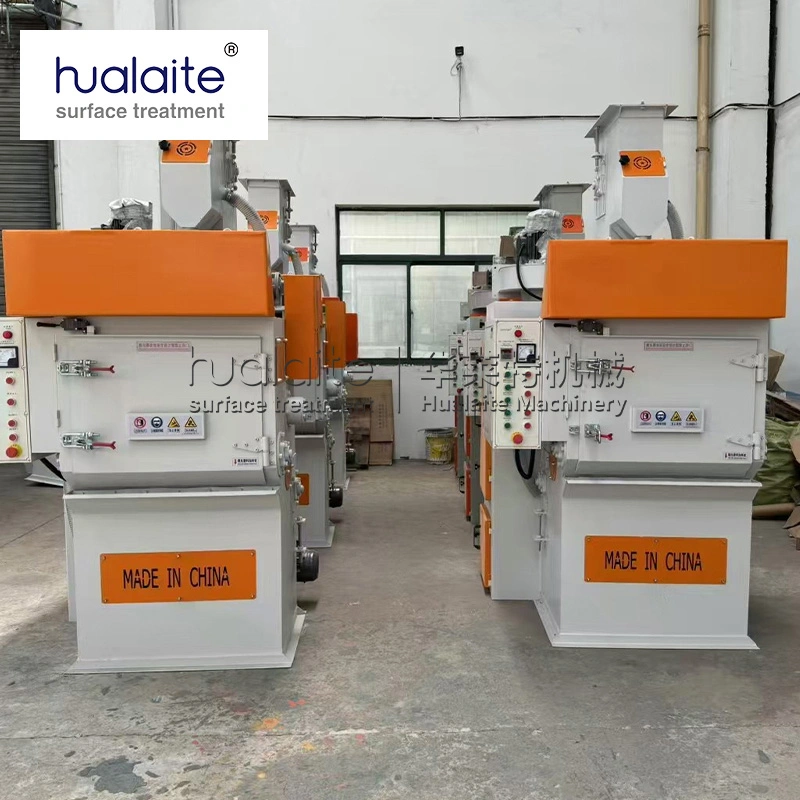
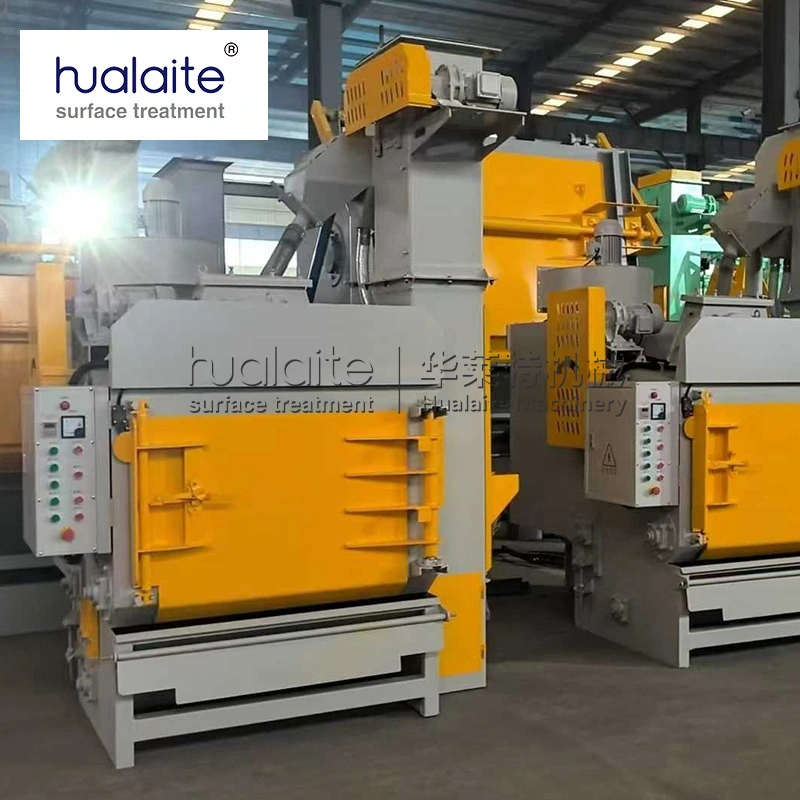
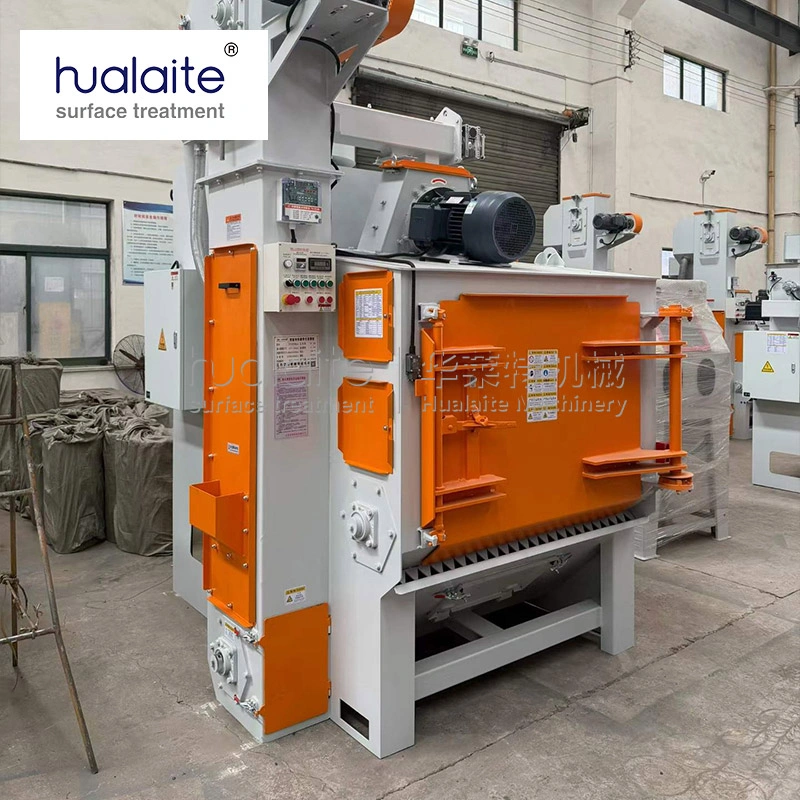
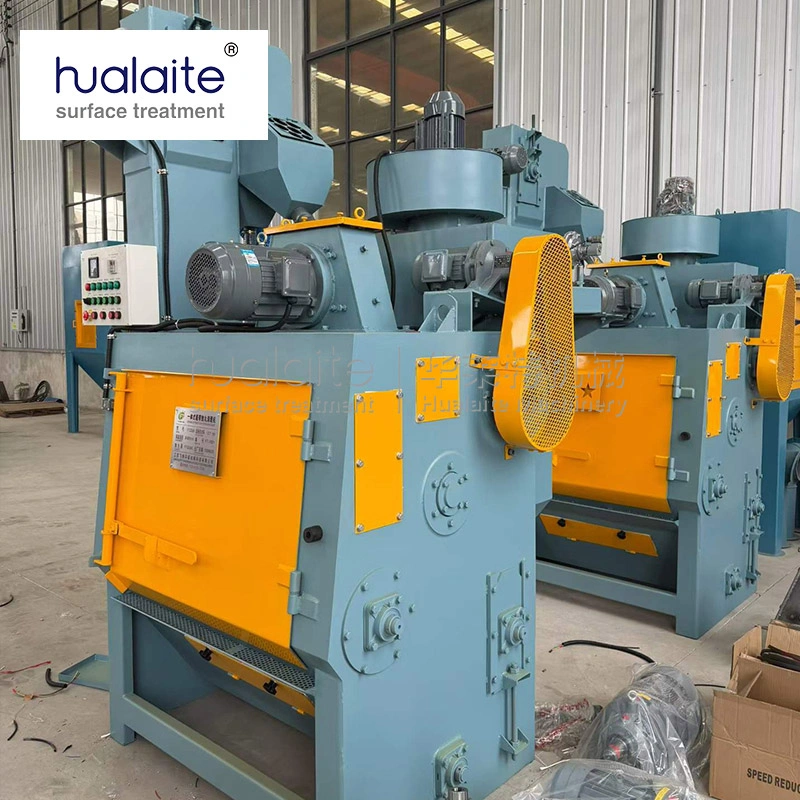
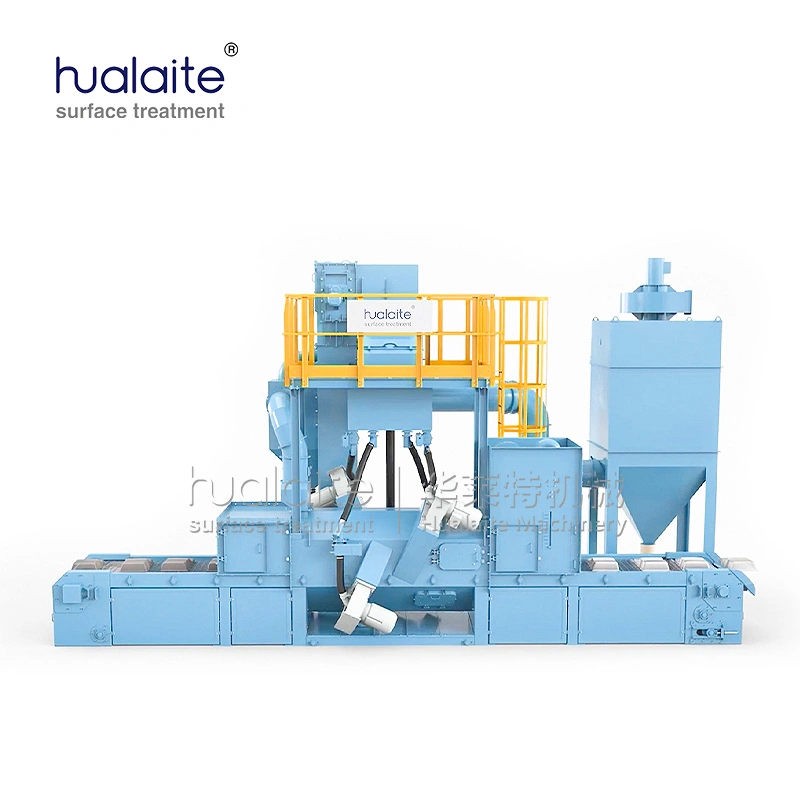
This crawler-type shot blasting machine is a high-efficiency surface treatment system that utilizes an endless metal or rubber belt to form a tumbling chamber, causing workpieces to roll continuously during the blasting process. Its core operating principle is as follows: after a specified quantity of workpieces is loaded into the cleaning chamber and the door is closed, the machine starts, and the workpieces are set into a tumbling motion by the belt assembly; simultaneously, the shot blasting unit projects abrasive media at high speed in a fan-shaped pattern, striking the workpiece surfaces uniformly. The spent abrasive and debris fall through perforations in the belt into a bottom screw conveyor, which transfers the material to an elevator for transport to a separator. Dust-laden air is drawn by a fan into a dust collector, filtered, and discharged into the atmosphere as clean air. This machine can operate as a standalone unit or be integrated into a production line; it is suitable for surface descaling or shot peening of workpieces produced in various types and in medium-to-large batches. The workpieces to be cleaned must be capable of withstanding impact, such as castings or heat-treated parts.
Regarding manufacturing and structural quality, the machine features a cantilever-type centrifugal shot blasting unit, characterized by a long service life and a simple structure. The blasting unit supports three projection speeds: 75 m/s, 80 m/s, and 85 m/s. The chamber is lined with rolled Mn13 steel plates, reducing maintenance costs by approximately 60%. The pulley system employs an advanced quick-change design, enhancing production efficiency and reducing labor intensity. A BE-type separator is used, offering excellent separation performance and high productivity, which helps extend the service life of the blast wheel blades. The dust removal system utilizes a bag-type dust collector; dust emission concentrations remain below national standards, thereby improving the working environment. Wear-resistant rubber belts are used inside the equipment to effectively minimize impact damage to workpieces and reduce noise levels. The chamber design incorporates 3D dynamic simulation of the shot projection; all angles and positioning were determined via computer modeling to maximize abrasive utilization—minimizing “empty” projection (where media misses the target) while ensuring comprehensive coverage—and to reduce wear on the chamber’s protective liners.
This crawler-type shot blasting machine offers outstanding performance advantages and significant application value. First, it offers high cleaning efficiency, with a production capacity ranging from 0.24 to 5 tons per hour and a batch load capacity of 80 to 800 kg, meeting the needs of various production scales. Second, it boasts broad applicability, suitable for tasks such as removing sand from metal castings, derusting ferrous metal parts, deburring stamped parts, surface treating forgings and heat-treated components, and removing scale and refining grain structures on springs. Third, it features a high degree of automation, incorporating PLC and electrical control systems, as well as automatic monitoring, automatic protection, and stepless variable-frequency speed regulation. Fourth, it delivers superior cleaning quality, revealing the material’s natural finish after shot blasting. Fifth, it offers excellent environmental performance and sealing; equipped with a bag-type dust collector, it ensures dust emission concentrations remain below national standards. Sixth, it provides outstanding overall benefits, including low noise levels, minimal dust, and high productivity, while the automatic recovery and reuse of shot media reduce material waste and lower costs.
In terms of application, this tumble-belt shot blasting machine is widely used in industries such as foundries, heat treatment plants, and factories producing electric motors, machine tools, bicycle parts, power machinery, automotive and motorcycle components, and non-ferrous metal die-castings. Typical workpieces include die-castings, precision castings and forgings, small coil springs, bearings, gears, stamped parts, and fasteners. It is ideal for removing surface scale, molding sand, and rust from heat-treated parts, castings, and forgings. Shot blasting reduces tensile stress and refines surface grain structures, thereby strengthening the workpiece surface and extending its service life; it also prepares an excellent base surface for subsequent finishing processes such as electroplating or painting.
| 1. Product Series Classification | ||
|---|---|---|
| Series Model | Belt Type | Features |
| HLTQ324 | Rubber Belt | Small workpieces, manual feeding, suitable for micro-batch production |
| HLTQ326 / HLTQ326C | Rubber Belt | Small & medium workpieces, cost-effective, output 0.6-1.2t/h |
| HLTQR326 | Rubber Belt | Automatic feeding, higher working efficiency |
| HLTQ328 | Rubber Belt | Medium workpieces, output 1-2.1t/h |
| HLTQ3210 / HLTQ3210C | Rubber / Steel Belt | Medium & large workpieces, output 3-5t/h |
| HLTQR3210 | Rubber Belt | Automatic feeding, for large workpieces |
| 2. Main Technical Parameters of HLTQ32 Series | ||||||||
|---|---|---|---|---|---|---|---|---|
| Parameter | HLTQ324 | HLTQ326 | HLTQR326 | HLTQ328 | HLTQ3210 | HLTQR3210 | ||
| Productivity (t/h) | 0.24~0.5 | 0.6~1.2 | 0.6~1.2 | 1~2.1 | 3~5 | 2~2.5 | ||
| Charging Capacity (kg) | 80 | 200 | 300 | 350 | 800 | 600 | ||
| Max Single Workpiece Weight (kg) | 2 | 10 | 10 | 12 | 15 | 30 | ||
| End Plate Diameter (mm) | 400 | 650 | 650 | 800 | 1000 | 1000 | ||
| Effective Volume (m³) | 0.1 | 0.15 | 0.15 | 0.21 | 0.4 | 0.3 | ||
| Abrasive Blasting Capacity (kg/min) | 100 | 120 | 120 | 250 | 250 | 250 | ||
| Dust Removal Air Volume (m³/h) | 1800 | 2000 | 2000 | 3500 | 6000 | 6000 | ||
| Total Power Consumption (kW) | 7 | 12.6 | 13 | 15.8 | 32.6 | 24.3 | ||
| 3. Blast Wheel Parameters | |
|---|---|
| Blast Wheel Type | Cantilever Centrifugal Blast Wheel (Model HLTQ034 / HLTQGTE) |
| Blasting Velocity | 75 m/s, 80 m/s, 85 m/s (Optional) |
| Blast Wheel Power | 7.5~15kW |
| Abrasive Blasting Capacity Range | 100~250kg/min |
| Pulley Structure | Quick-replaceable Structure |
| 4. Belt Conveying System | |
|---|---|
| Belt Type | High-strength Wear-resistant Rubber Belt / Rolled Mn13 Steel Belt |
| Belt End Plate Diameter | φ400~φ1000mm |
| End Plate Rotation Speed | 3.5~3.6r/min |
| Belt Driving Power | 0.75kW |
| 5. Cleaning Cabinet & Wear Liners | |
|---|---|
| Cabinet Liner Material | Rolled Mn13 High Manganese Steel Wear-resistant Plate |
| Liner Performance | High impact toughness, long service life (10 years under normal operation) |
| Maintenance Cost | Approximately 60% lower than traditional liners |
| Cabinet Design | 3D dynamic blasting simulation design by computer |
| 6. Separation & Dust Removal System | |
|---|---|
| Separator Type | BE Type Separator (Overflow Controllable Full-curtain Multi-stage Air Separation) |
| Separation Performance | Efficient separation of abrasives, slags and dust |
| Dust Removal Mode | Bag Dust Collector / Pulse Backblow Cartridge Dust Collector |
| Discharge Standard | Dust emission concentration below national standard |
| Dust Removal Air Volume | 1800~6000m³/h |
| 7. Application Parameters | |
|---|---|
| Applicable Workpieces | Castings, forgings, die castings, stamping parts, gears, springs, bearings, fasteners |
| Applicable Industries | Foundries, heat treatment plants, motor factories, machine tool plants, auto parts factories, motorcycle parts factories |
| Cleaning Effect | Remove oxide scale, molding sand & rust; surface strengthening and grain refinement |
| Cleaning Grade | Sa2~Sa2.5 |
| Customization | Custom design & manufacturing based on customer workpiece requirements |
| 8. Equipment Composition | |
|---|---|
| Main Components | Cleaning cabinet (blasting chamber), blast wheel assembly (impeller, blades, control cage, directional sleeve etc.), high-strength wear-resistant belt (rubber or manganese steel), screw conveyor, bucket elevator, BE type separator, bag dust collector, electrical control system (PLC / variable frequency speed control) |
Reviews
There are no reviews yet.